2026 Audi RS 3 vs 2027 BMW M2 xDrive: A Study in Opposite Engineering Philosophies



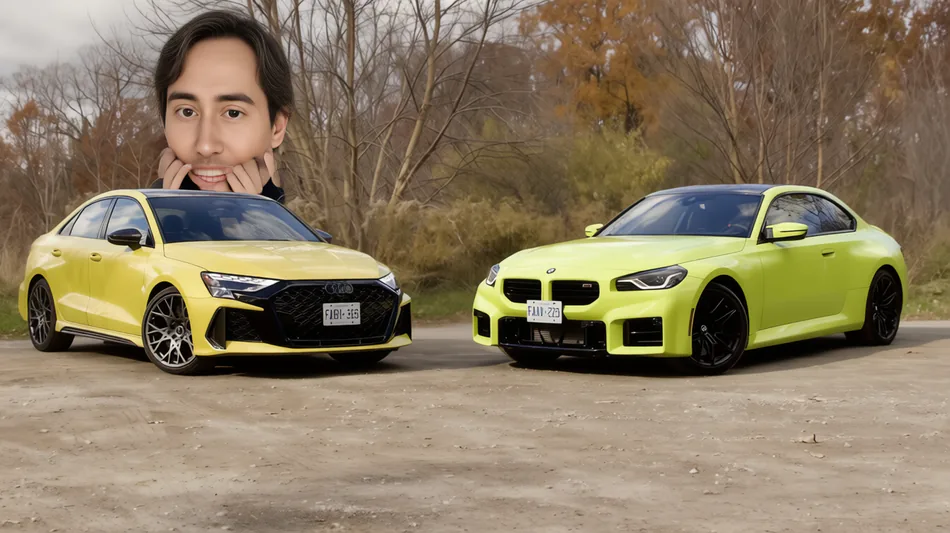
The 2026 Audi RS 3 and 2027 BMW M2 xDrive deliver nearly identical acceleration and lap times despite being engineering opposites. While the BMW relies on rear-biased torque and linear power delivery, the Audi utilizes front-heavy weight distribution and a hyperactive turbocharged engine to achieve similar results, offering distinct driving experiences for buyers prioritizing either civility or raw engagement.
The 2026 Audi RS 3 and the 2027 BMW M2 xDrive present a paradox in modern automotive engineering: two vehicles that are virtually indistinguishable in raw performance metrics yet fundamentally opposed in their mechanical philosophy. When measured against standard acceleration benchmarks, the gap between them is negligible. The all-wheel-drive BMW M2 accelerates from zero to 100 kilometers per hour in 3.7 seconds, while the Audi RS 3 completes the same sprint in 3.8 seconds. At higher speeds, the difference vanishes entirely; both vehicles reach 200 kilometers per hour in exactly 12.8 seconds.
Top speed figures are similarly clustered, with the Audi RS 3 achieving approximately 290 kilometers per hour when equipped with the optional Dynamic Plus package. The BMW M2 xDrive reaches a top speed of 285 kilometers per hour, contingent upon the installation of the optional M Driver’s Package. On the track, specifically at the Nürburgring, the two models have engaged in a prolonged contest of lap times that mirrors the rivalry between tennis legends Björn Borg and John McEnroe. The base rear-wheel-drive M2 with a six-speed manual transmission initially set a benchmark of 7 minutes and 38.7 seconds. Audi responded with an RS 3 time of 7:33.1. BMW subsequently countered with its Competition Sport version of the M2, which features increased horsepower, reduced weight, and carbon-ceramic brakes, achieving a time of 7:25.5.
These performance figures highlight two significant shifts in the automotive landscape. First, the speed at which these compact vehicles now lap the Nürburgring would have required a mid-engine supercar from Italy just a decade ago. The RS 3’s time is barely one second slower than Audi’s former flagship V10-powered R8 achieved ten years prior. Second, with the introduction of the xDrive system to the M2, the quantitative performance gap between the two cars has effectively closed. Qualitatively, however, they remain worlds apart.
The driving experience of the RS 3 is characterized by a hyperactive, anxious energy. The vehicle’s 2.5-liter inline-five engine feels as though it is under constant pressure to accelerate, driven by a turbo system that generates approximately 20 psi of boost. This setup creates a power delivery that some might describe as lumpy or unpredictable; throttle input does not always correlate linearly with torque output. Pressing the pedal one-tenth of the way may summon 10 percent of the engine’s maximum 369 pound-feet of torque, but moving the pedal to three-tenths of its travel does not necessarily result in 30 percent of that torque. This non-linear response contributes to a raw, visceral feel that appeals to drivers seeking immediate, aggressive feedback.
In contrast, the BMW M2 xDrive exhibits a calm, collected demeanor. Its twin-turbocharged 3.0-liter inline-six engine delivers power with perfect linearity. The torque curve is flat and predictable, meaning that a 10 percent application of throttle yields a proportional amount of acceleration, while a 30 percent application yields three times that force. This linear response makes the BMW easier to control and more civilized in its operation. While the Audi feels like a motocross bike bouncing off berms, carving corners with sharp, immediate direction changes, the BMW moves through turns with the graceful, sustained arcs of a Formula One car.
This divergence in driving character is rooted in fundamental differences in chassis architecture and weight distribution. Audi has historically engineered its vehicles around front-wheel-drive platforms, even when equipping them with its quattro all-wheel-drive systems. The RS 3 retains this DNA. Its engine is mounted laterally and positioned far forward in the chassis, resulting in a weight distribution of 58 percent over the front wheels and only 42 percent over the rear. To mitigate the inherent understeer associated with this heavy front end, Audi utilizes a unique tire configuration. The RS 3 features reverse-asymmetry tires: wider 265/30ZR19 Pirelli PZeros at the front and narrower 245/35ZR19s at the rear. This stagger is designed specifically to enhance front-end grip and reduce understeer. Additionally, the RS 3 weighs approximately 124 kilograms (273 pounds) less than the M2 xDrive.
The BMW M2 xDrive, conversely, is built upon a rear-wheel-drive architecture. Its inline-six engine is mounted longitudinally and pushed far back into the chassis. While the manual transmission version of the M2 has a weight distribution of 52 percent rear and 48 percent front, the addition of the xDrive system’s front differential and associated hardware shifts this balance closer to an even 50-50 split. To handle the torque, BMW employs traditional staggered tires with smaller 275/35YR19s at the front and massive 285/30YR20 Michelin Sport Cup tires at the rear. The xDrive system is programmed to send all 443 pound-feet of torque to the rear wheels under normal conditions, only transferring power to the front tires when the rear Michelins begin to slip.
The transmission choices further distinguish the two vehicles. The Audi RS 3 utilizes a seven-speed dual-clutch transmission that prioritizes speed and performance. Shifts are rapid, and response to steering-wheel paddles is instantaneous. Even in automatic mode, the transmission’s primary motive is enhancing performance rather than comfort. The BMW M2 xDrive uses an automatic transmission that offers smoother, more buttery shifts but lacks the mechanical connection provided by a dual-clutch system. While BMW argues that modern automatics are suitable for sports cars, the RS 3’s transmission provides a more engaging driving experience for enthusiasts who value direct feedback.
Interior design and practicality also diverge significantly. The BMW M2 xDrive embodies a cool, modernist aesthetic with unified screens and multiple digital applications. However, its interior is cramped. The rear seats are barely usable, offering little more utility than the small shelves found in Porsche 911s, which allows the manufacturer to claim it is a "2+2" vehicle. The RS 3, while featuring an older infotainment system with a small 10.1-inch touchscreen and a dated gauge cluster, offers superior practicality. It has four doors and usable rear seats, making it a viable option for newlyweds or small families who need to install child seats. The Audi’s cabin is also more comfortable, with seats that are notably more supportive than the BMW’s front buckets. Despite running on a wheelbase that is 116 millimeters shorter than the M2’s, the RS 3 provides surprising interior room.
Pricing plays a role in the comparison as well. The Audi RS 3 starts at $81,310, while the BMW M2 xDrive has a starting MSRP of $86,500. This price difference reflects the additional cost of the xDrive system and the premium associated with BMW’s brand positioning.
Ultimately, the choice between the two vehicles depends on the driver’s priorities. The RS 3 offers a hyperactive, engaging driving experience with greater practicality and a lower entry price. It appeals to those who want to revisit the thrill of their youth with a turbocharged Honda Civic but in a more sophisticated package. The BMW M2 xDrive, however, is the more civilized option. It delivers the expected noises of a modern European sports car, possesses a ride-handling balance that has been BMW’s hallmark for decades, and offers superior linear control. For buyers who prioritize civility, predictability, and rear-biased dynamics, the M2 xDrive represents the pinnacle of small German sports cars, despite its higher cost and lesser practicality.
The comparison underscores a broader trend in the automotive industry where performance metrics are converging across different engineering philosophies. Whether through front-wheel-drive-based all-wheel systems or rear-wheel-drive-based all-wheel systems, manufacturers are achieving similar lap times and acceleration figures. However, the journey to those numbers remains distinct. The RS 3 fights physics with aggressive torque vectoring and reverse-asymmetric tires, while the M2 xDrive embraces its rear-drive heritage with linear power delivery and balanced weight distribution. Both vehicles succeed in their respective goals, offering drivers two very different ways to experience high performance.
H.Engstrom--StDgbl