'No home': Spanish pensioner returns to charred ruins after wildfire / Photo: Oscar DEL POZO - AFP



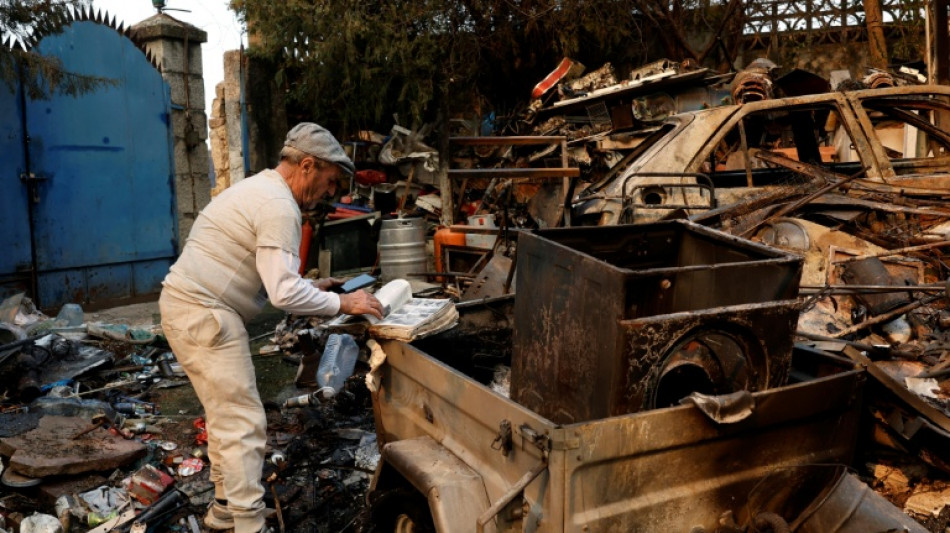
As far as the eye can see, Jose Fernandez spied only burnt furniture, half-collapsed walls and mountains of ash on what used to be his house and land.
"I have no money, no documents, no home," said the 74-year-old pensioner, one victim of the wildfires that burned his town, Pelayos de la Presa, and numerous others west of Madrid.
The blaze advanced from the San Juan reservoir area, one of the worst-hit parts of this municipality, which lives off tourists drawn by the water and the beauty of its natural surroundings.
Now the village is half empty. Many residents, evacuated late last week as the flames approached, are just beginning to return home after evacuation orders were lifted on Tuesday.
When the fire reached the house where Fernandez has lived with his wife for 35 years, a Civil Guard officer came to tell him, "rudely", that he had to leave.
He refused. "I told him: 'You don't know what you're doing. I'm a 74-year-old man and I'm here standing my ground," he told AFP.
"I've put out many fires since I was a child. Where I come from, when a house caught fire, I went up the hill and put it out with buckets."
In the end, he was forced to evacuate. He came back days before the latest wave of returns and walked around the plot, repeatedly assessing everything he had lost.
- 'Total ruin' -
Beside the main house, now in ruins, stood a large yard where Fernandez had stored the materials and tools from a lifetime of work.
All were destroyed: the refrigerator and chairs from the bar he once owned; a van from his years in construction; plumbing equipment and the tools from his time repairing household appliances.
"This place has been reduced to a total ruin. We had the fireplace there. Just imagine," he told AFP, his voice breaking as he walked among the rubble.
The mayor of Pelayos de la Presa, Antonio Sin, called the fire that struck the town of 3,000 people a "monster".
Altogether, around 15 families lost their primary homes, and the priority now is to rehouse them.
Along the streets, blackened houses stood beside others that were left untouched -- a sign of how unpredictably the fire and the wind behaved.
Now came the time for rebuilding.
"We have to solve one problem at a time, trying to assess their importance in order of priority and knowing that this work will take years," said the mayor.
For Fernandez, a new life was also beginning.
The town hall had offered him accommodation, while friends and neighbours rallied to help.
"This disaster is beyond comprehension," he said, his eyes glistening.
L.Hansson--StDgbl