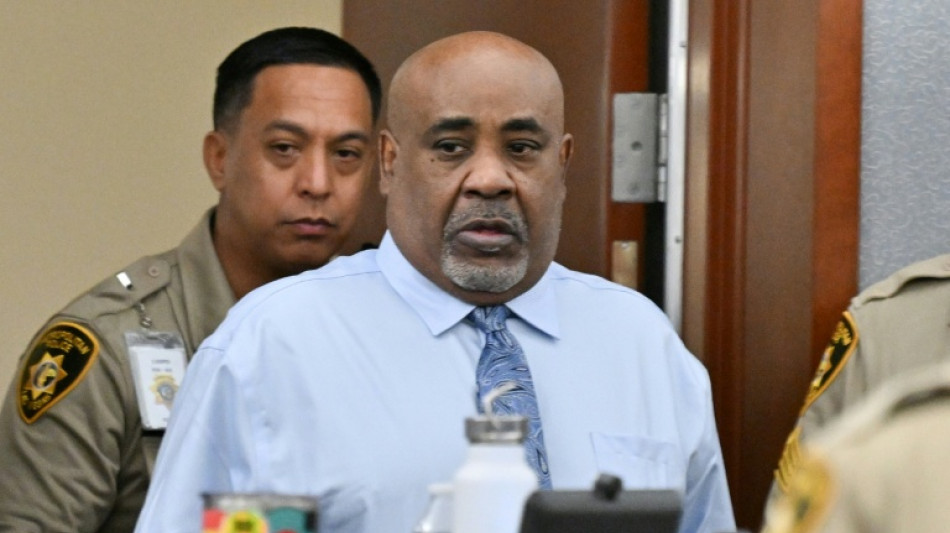
Opening arguments expected in Tupac murder trial / Photo: David Becker - POOL/AFP

Opening arguments were expected on Monday in the trial of a former gang leader accused of orchestrating the murder of Tupac Shakur, 30 years after one of America's most influential rappers was gunned down in Las Vegas.
The proceedings, which could last over a month, will likely not make clear who fired the shots that killed the California hip-hop legend on the night of September 7, 1996, while he was in the gambling hub to see a Mike Tyson fight.
But prosecutors aim to show that Duane "Keffe D" Davis, onetime leader of the South Side Compton Crips, ordered the killing and provided the gun used in a drive-by shooting.
Davis, 63, was in court last week as a jury was selected. He faces life in prison without parole if convicted.
The killing of Shakur, also known as 2Pac, is one of America's most celebrated cold cases, prompting endless debate among music fans over who did it and why.
The rapper, who was just 25 when he died, was a key figure in a hip-hop rivalry pitting the East Coast against the West Coast.
Known for hits like "California Love" and "All Eyez on Me," Shakur -- the son of a Black Panther -- was raised in Harlem and Baltimore, but quickly became the epitome of a California bad boy when he signed with Los Angeles-based Death Row Records.
The trial will revisit the battle between Death Row, founded by Marion "Suge" Knight, and Bad Boy Records, the East Coast label created by Sean "Diddy" Combs, which signed Christopher "The Notorious B.I.G." Wallace -- who was murdered in March 1997.
Prosecutors say Death Row Records was protected by Mob Piru, a Los Angeles gang that was part of the wider Bloods alliance. Knight was affiliated with the group.
Bad Boy Records had hired the rival South Side Compton Crips, led by Davis, as bodyguards.
After the Tyson fight at the MGM Grand casino, Knight and Shakur beat up Davis's nephew, Crips member Orlando "Baby Lane" Anderson, in retribution over an alleged assault of a Death Row employee.
Davis was out for revenge, the prosecution says.
Later that night, a white Cadillac carrying Davis, Anderson and others pulled up beside Shakur's car in Las Vegas. Shots were fired from the Cadillac, and Shakur was fatally wounded.
The investigation sputtered for decades because of a lack of evidence, but the case was revived when Davis's memoirs were published in 2019.
In the book, he recounted that he was in the front seat of the Cadillac and that he handed a pistol to those in the back seat. But he does not say who opened fire on Shakur. Everyone else who was in the Cadillac that night is now dead.
Davis has since backtracked, insisting the claims were bluster and were created by a ghostwriter to sell books. He has pleaded not guilty.
H.Engstrom--StDgbl