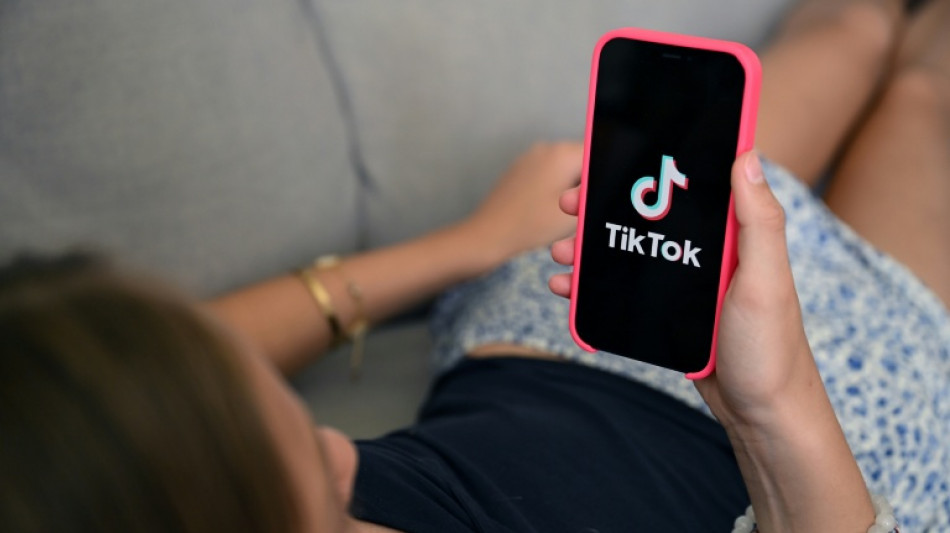
TikTok to pay Alabama $100 mn under pre-trial settlement / Photo: Nicolas TUCAT - AFP

TikTok on Friday agreed to pay Alabama at least $100 million and enact limits for teen users, avoiding a trial set to begin next week in the southern US state over claims related to child safety on the platform.
"Under the settlement, Alabama will receive a minimum oSuref $100 million, due to the state within 45 days, with the potential to receive up to $300 million if certain conditions are met," the office of the Attorney General Steve Marshall said.
The trial had been set to begin on Monday with jury selection.
According to Marshall, TikTok has agreed to enact two-hour daily time limits and restrict access for children from midnight to 6:00 am, among a host of other parental and other safety features.
Alabama's suit was the latest in a wave of litigation targeting social media companies across the United States over the harm their apps allegedly cause young users.
TikTok had also previously settled cases against it that were headed for trial, including a Los Angeles lawsuit brought by a young woman and a suit from a Kentucky school district.
Meta, by contrast, has taken its chances in court -- with bruising results.
In March, a jury in New Mexico ordered the Facebook and Instagram owner to pay $375 million after finding it had misled the public about the safety of its platforms for children.
That same month, a Los Angeles jury found Meta and Google's YouTube negligent in the case of a 20-year-old woman who said she became hooked on social media as a child, awarding her $6 million.
In August, Meta agreed to pay $18 billion to settle a sweeping lawsuit brought by US states accusing it of designing Instagram and Facebook to addict children.
Going to trial would have exposed TikTok to unprecedented public scrutiny of how it handles safety internally, with company documents and executive testimony potentially aired in open court.
Alabama originally sued TikTok and its Chinese parent company ByteDance in April 2025, alleging the app was engineered to hook young users "just like a sophisticated gambling machine."
The state later narrowed its case to claims under Alabama's Deceptive Trade Practices Act, focusing on whether TikTok misrepresented the effectiveness of features such as "Restricted Mode" and "Kids Mode."
In its complaint, the state said investigators set up TikTok accounts posing as 13-, 14- and 15-year-olds in Alabama and switched on Restricted Mode.
Despite TikTok's assurances that users in that mode should not see mature themes, the accounts were quickly served videos about suicide, self-harm, eating disorders, alcohol and sex, according to the filing.
The state also accused TikTok of falsely telling app stores the platform was suitable for children aged 12 and up and contained only mild or infrequent mature content.
TikTok, whose US operations were transferred this year to a venture led by American investors, has argued that the case should be paused and that it is shielded by Section 230, a federal law that protects online platforms from liability for content posted by users.
Asked for comment on the settlement Friday, a TikTok spokesperson said the company's "priority has always been fostering a safe and positive space where people can be creative, discover what they love, and connect with their community."
"This builds on our commitment and core objective to continually enhance our robust safety tools to protect teens," the spokesperson added.
L.Sundstrom--StDgbl