Director Jordan Firstman on 'Club Kid': Fatherhood, Exhaustion, and a Child DJ



In his feature directorial debut "Club Kid," actor Jordan Firstman explores the abrupt transition from self-absorbed nightlife to responsible guardianship. The film follows a gay New York party promoter who is forced to care for a 10-year-old son, leading Firstman to reflect on the exhaustion of ego and the transformative power of caring for another person.
Jordan Firstman, an actor and filmmaker making his feature directing debut with "Club Kid," has a specific theory regarding why people choose to have children. Although he is childless himself, Firstman developed this perspective while writing and producing the film, which opens Friday, Nov. 13, in Bay Area theaters.
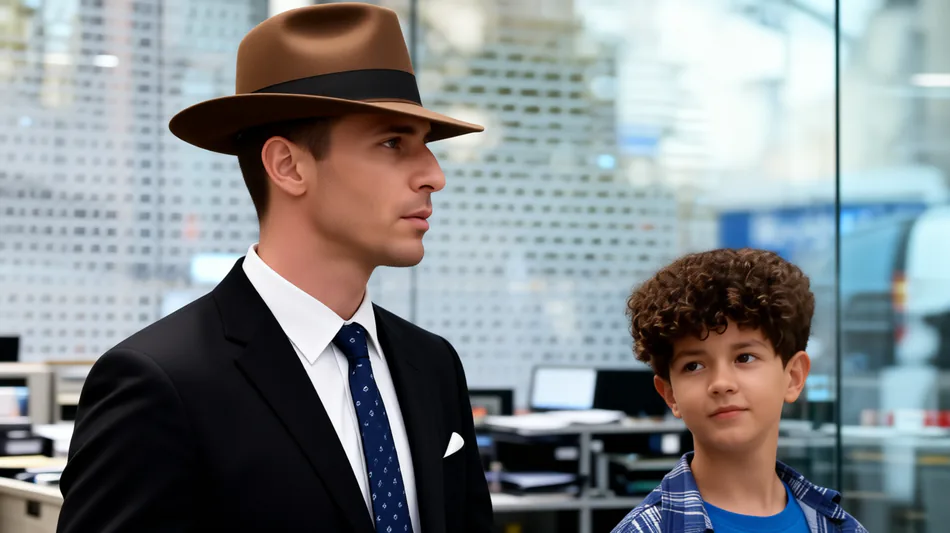
Firstman was in San Francisco for a screening of "Club Kid" at the Castro Theatre, organized by the San Francisco Film Society (SFFILM). The film centers on Peter, a gay New York party promoter who is suddenly presented with a 10-year-old son. This child, Arlo, is the result of an encounter Peter cannot even remember. The narrative tension arises from the clash between Arlo’s need for stability and Peter’s lifestyle, which revolves around clubbing, parties, and the use and sale of drugs.
"I was just thinking about my life and what it would take for me to have to instantly grow up," Firstman said during his stay in San Francisco. "I think that’s why a lot of people do have kids. They’re like, ‘I want to feel like a grown up and I’ll have to be responsible.’ It just becomes exhausting to think about yourself all at the time, and a kid really forces you to not think about and to actually take care of someone else."
This sentiment forms the emotional core of the film. Peter initially takes Arlo into his home reluctantly. The boy is described as utterly alone, separated from his birthplace in London by an ocean. However, as Peter gets to know the child, he begins to fall in love with both his son and the concept of fatherhood. His approach to parenting is unconventional; it involves sharing playlists and integrating Arlo into his nightlife, a possibility made viable because the boy possesses significant DJ skills.
The genesis of "Club Kid" dates back a few years to a dinner party where Firstman encountered an 8-year-old guest. He attempted to make the child laugh with inappropriate jokes and realized that their energies matched. He sensed he was still a kid himself and found humor in the situation. At the time, Firstman was living in Berlin with a boyfriend, partying frequently, and enjoying his freedom.
"I was in love and it was a great time, but it was definitely holding me back from what I wanted to do," Firstman recalled. "I was like, ‘When am I going to grow up?’ I think all of these things were floating around my mind at the same time and that’s kind of the genesis of it."
Firstman openly acknowledges a range of cinematic influences on his work. He cites Robert Benton’s 1979 drama "Kramer vs. Kramer," in which Dustin Hoffman plays a man learning to parent alone after a divorce, as a primary reference. Other influences include John Cassavetes’ 1980 film "Gloria," featuring a woman protecting a young boy from the mob; Robert Redford’s dysfunctional family drama "Ordinary People" (1980); and Martin Scorsese’s black comedy "After Hours" (1985), which depicts New York nightlife as a descent into hell.
He also points to Boaz Yakin’s 2003 film "Uptown Girls," about a childish nanny caring for a precocious child, and "I Am Sam" (2001), where Sean Penn plays an intellectually disabled father fighting for custody. However, Firstman identifies Peter Bogdanovich’s 1973 comedy-drama "Paper Moon" as perhaps the most significant influence. That film stars Ryan O’Neal as a Depression-era con man who may be the father of a traveling companion, a little girl played by Tatum O’Neal.
"Even though they’re both kind of evil, they get each other," Firstman explained regarding "Paper Moon." "It’s like the first movie I’d seen where like a kid is not treated like a kid, and those two characters really understand each other in a way no one else does. And I think Peter and Arlo have that same thing."
While Firstman had a script, he noted that the key to the film’s success lay in casting the role of Arlo. The actor needed to meet numerous criteria, including having parents willing to allow their child to participate in a film with adult situations and dialogue. Firstman expressed gratitude for finding Reggie Absolom, who is now 14 years old.
"It’s crazy. In the movie, he looks really young," Firstman said. "I always talk about the miracle that is Reggie, finding Reggie, and he just fit. He checked every box for me. He looked like the character I was writing in my head. He’s actually cool. Has good taste in music. He’s an amazing actor. And if I had made the movie this year, he couldn’t have been it. He looks too old now."
In the film, Peter integrates Arlo into his world by having him DJ at his parties. The character of club DJ Saffron is played by former Bay Area club performer Saturn Risin9. The plan is for the boy to perform an early set before the night becomes too chaotic.
Firstman emphasized that the audience’s reaction to Arlo’s presence in the club is a deliberate "magic trick" of the film. He noted that viewers rarely react with shock at the boy being there, instead feeling positive about his creativity and self-expression. To achieve this tone during filming, Firstman ensured Absolom was actually DJing. The costars and extras danced to his real music, creating a safe environment for the young actor.
"It was a really good experience," Absolom said. "It was the best first experience of the club that someone can really have. Because, obviously, it could go wrong the first time going. But since I was in such a safe place with loads of people around me that I could go to for help if I needed it or if I wanted it, I felt so safe there that it made me enjoy it like 10 times more."
The relationship between Peter and Arlo is defined by their unconventional roles. Aside from being complete strangers at the start, Peter is a man-child, while Arlo has matured prematurely due to his unstable mother. Firstman describes the dynamic as reciprocal: "I like to think that like Arlo teaches Peter to be an adult, and Peter teaches Arlo to be a kid."
Firstman elaborated on this exchange, noting that Arlo has experienced so much trauma that he no longer feels capable of joy. Peter’s role is to teach him how to laugh, create, and find community without fear. "Arlo learns how to have fun," Firstman said.
"Club Kid" opens in Bay Area theaters on Friday, Nov. 13.
Z.Nyberg--StDgbl