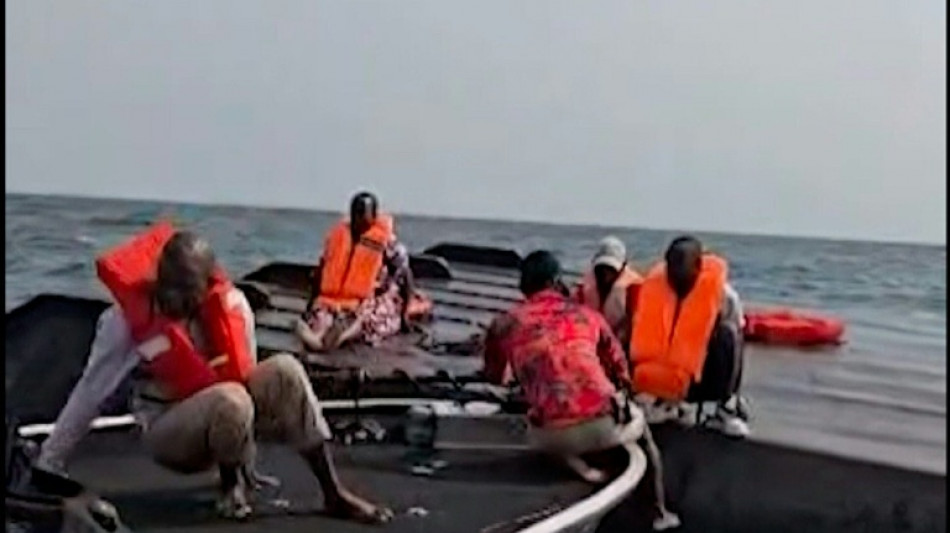
At least 44 drown after ferry overturns on Zimbabwe's Lake Kariba / Photo: -UGC - Maxton Kanhema/AFP

Search and rescue operations continued Wednesday after a government passenger ferry capsized on Zimbabwe's Lake Kariba, claiming at least 44 lives, authorities said.
A witness told AFP that after the ferry sank in rough weather on Tuesday bodies could be seen in the water as rescuers tried to reach the vessel, which was entirely overturned.
Passengers had pleaded with the driver to turn back in the rough waters, local media quoted a survivor as saying.
The civil protection unit (CPU) said overnight that 77 people had been rescued and 15 bodies retrieved from the Rural Infrastructure Development Agency (RIDA) ferry.
The Zimbabwe Republic Police updated the toll later Wednesday, saying on X: "The ZRP informs the public that the death toll in the Kariba RIDA boat accident is now 44."
It is one of the worst recorded passenger boat disasters on the lake, which is on the border with Zambia and more than 300 kilometres (185 miles) northeast of the capital, Harare.
The vessel transports people between the northern town of Kariba and islands and fishing villages around the vast stretch of water, the largest man-made lake in the world.
It provided a vital link for villagers and traders from rural areas to the Kariba commercial hub.
A survivor told the ZBC broadcaster that passengers had asked the driver of the ferry to turn back because of the choppy conditions but he refused.
The vessel may also have been damaged because it was taking on water, said the woman, whose name was not provided.
"We went ahead with some water in the boat while the waves were also getting stronger and rocking the boat. We pleaded with him to phone the captain but he said to us we were not in a position to tell him what to do," she said.
- Overcrowded, 'death trap' -
The ferry had the capacity for 90 people but was carrying 114 adult passengers, five crew members and an unspecified number of children when it went down, the CPU said.
Video taken soon after the accident showed a helicopter hovering over the upturned ferry as an assortment of boats took part in the rescue. Bodies and items floated nearby.
The witness, Maxton Kanhema, told AFP that the boat left in the morning in bad weather and may have been hit by a wave, causing its engines to switch off.
"When we were in the waters, then you could see a distress sign and then boats that were close by responded," said Kanhema, who was on a small boat which attended the scene on Tuesday afternoon.
A national park provided a helicopter to help in the rescue effort alongside bigger boats and divers from the local area and the army, he said.
"People were in distress... there were bodies in the water and it was a sad situation to witness. Those that could be rescued were rescued," he said.
In a message of condolence, President Emmerson Mnangagwa said he had declared the accident a national disaster.
"This tragedy has exposed serious deficiencies in our maritime capabilities which we have to address immediately so that our places of recreation do not become death traps to the innocent," he said.
A specialised aquatic rescue unit was airlifted to the area to aid in the search and two funeral parlours were engaged to collect the bodies, the CPU said.
strs-clv-dsa-br/kjm
C.Gunnarsson--StDgbl