Medical AI paper predicts autonomous systems could outperform doctors in core clinical tasks by 2030



A JAMA article argues that autonomous AI could surpass both doctors and doctor-AI teams in several core medical tasks by 2030, a forecast disputed by medical leaders.
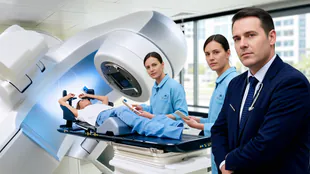
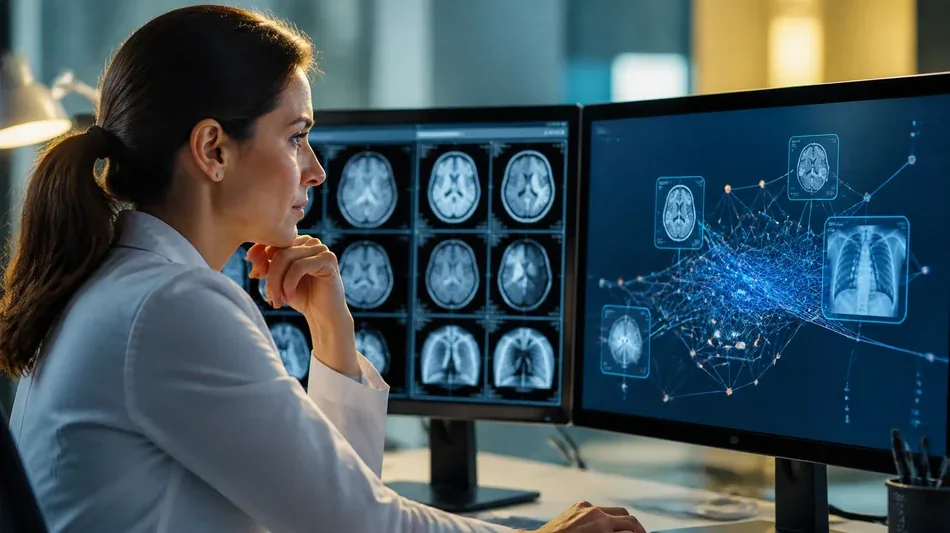
A paper published in the Journal of the American Medical Association has intensified debate over how far artificial intelligence could replace physicians in routine clinical work. The authors, including medical ethicist and oncologist Ezekiel Emanuel and investor Vinod Khosla, argue that autonomous AI is approaching a point where it could outperform both doctors and physicians working with AI on five fundamental tasks: taking medical histories, diagnosing disease, choosing tests, prescribing treatment and managing chronic conditions.The authors reviewed medical-AI studies published since January 1, 2024, and concluded that in many cases a superior autonomous system could surpass human-AI combinations by 2030. The paper discloses relevant financial interests and professional relationships, including Vinod Khosla's investments and the role of his son Neal Khosla, who runs the AI-enabled health service Curai Health.The conclusion is contested. American Medical Association chief executive John Whyte said some of the evidence is based on simulations rather than blinded real-world trials and does not uniformly support the paper's forecast. A Nature study published in February 2026 also found that many patients had difficulty interacting effectively with large language models in real-life settings.Robert Wachter, chair of medicine at the University of California, San Francisco, said the assumption that human-AI teams will always outperform AI alone may not hold in every situation. At the same time, he argued that physicians retain important roles in communication, empathy and helping patients make difficult choices. Medical educators are also considering whether heavy reliance on AI could weaken training in basic history-taking, physical examination and clinical judgment.The debate is therefore shifting from whether AI will be used in medicine to how responsibility should be divided between automated systems and clinicians. Even proponents of greater autonomy expect humans to remain essential in areas such as surgery, emergency care, procedures and conversations where trust and empathy are central.
L.Holmgren--StDgbl