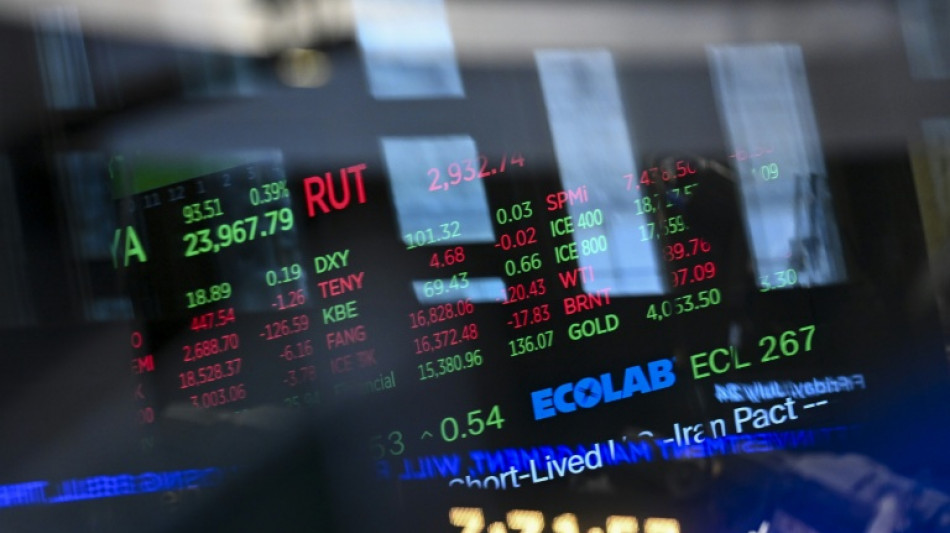
Hotter Europe isn't cooling investor fervor for stocks / Photo: ANGELA WEISS - AFP
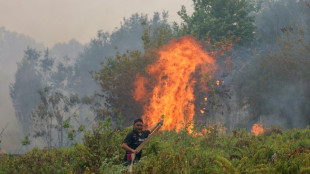
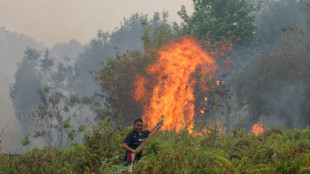
The heatwaves pummelling Europe this summer will have costly impacts on industries ranging from agriculture to tourism -- but that hasn't stopped stock markets from hitting all-time highs.
For investors enthralled by soaring corporate profits, headlines about the painful consequences from climate change are largely just background noise, experts say.
"The earnings season has been so strong, and the number one worry in terms of inflation being the situation in Iran, that global warming is really second order," said Florian Ielpo, head of macroeconomic research at the Swiss bank Lombard Odier.
In theory, markets are constantly pricing in expectations for everything from interest rates to technology advances. In practice, prospects of hotter weather disrupting wide swathes of everyday life are not pulling stock prices back to Earth.
The Paris, Frankfurt, Madrid and Milan exchanges all hit records in August, in line with recent all-time highs for Wall Street's key indexes.
"Even though Europe's problems have only gotten worse with this summer's abnormally hot temperatures, drying rivers and further disrupting transport within the continent, earnings expectations for Stoxx 600 companies keep rising!" Ipek Ozkardeskaya, senior analyst at Swissquote, wrote in a research note this week.
Even if climate change does not pose an immediate risk, the threat is likely to gradually move centre-stage over the next 10 to 15 years, Ozkardeskaya explained to AFP.
"The biggest risk for European equities is potentially stagflationary: climate change could simultaneously weaken productivity and growth, at the same time pushing food, energy, insurance costs, infrastructure spending and ultimately inflation structurally higher," she said.
Among the most vulnerable sectors, she cited agriculture and heavy industry as they deal with water scarcity and higher input prices, as well as insurance if firms face higher claims.
- 'Inclined to short-sightedness' -
France's Environment Minister Monique Barbut said this month that the fierce heatwaves this summer would cost 10 to 15 billion euros.
The heat is threatening harvests across the Continent, raising the spectre of soaring food prices.
And in Germany, steel giant Thyssenkrupp warned that record-low levels on the Rhine were threatening raw material deliveries, echoing industry warnings that the waterway could soon become unnavigable.
But that didn't stop its shares from surging nearly 10 percent on Thursday, as investors focussed on its profit outlook.
"Financial markets are inclined to short-sightedness," analysts at Metzler Asset Management in Germany said in a note.
"They usually incorporate risks that are two to three years on the horizon. But climate risks... do not fit with these market cycles," they said.
For John Plassard, head of investment strategy at Cite Gestion in Geneva, stock punters are in "total denial".
"No matter the sector -- technology, pharmaceuticals... -- companies today are not talking about heatwaves," he told AFP.
Global warming is also expected to upend decades of business as usual in the tourism and property sectors.
"There could be "a shift in tourism and real estate, from southern Europe to cooler northern destinations", Ozkardeskaya said.
Some investment managers say clients have indeed taken note, pointing to the growing awareness of so-called Environment, Social and Governance (ESG) funds.
"We are seeing an increased use of sustainable funds in recent years," said Axel Hartmann, a spokesman for BNP Paribas Personal Investors in Germany.
Metzler also says it has noted "a distinct demand for investment themes linked to electrification, decarbonisation and independence from fossil fuels".
But "for all sectors and regions overall, we have not yet seen any structural buying shift that would benefit the most advanced companies" in these areas.
A.Lundgren--StDgbl