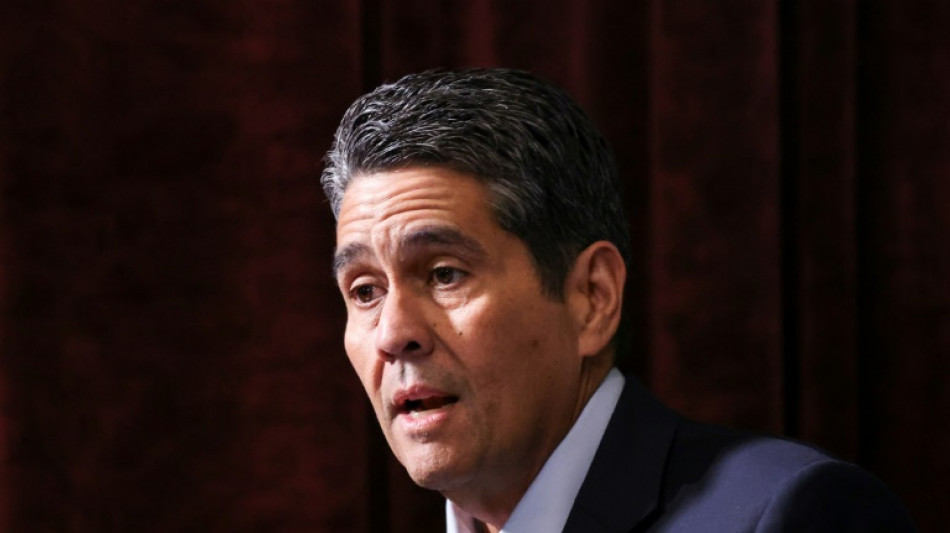
Pacific archipelago Palau agrees to take migrants from US / Photo: DAVID GRAY - AFP



The tiny Pacific island nation of Palau has agreed to accept up to 75 non-American migrants from the United States under a deal worth $7.5 million, the two countries have said.
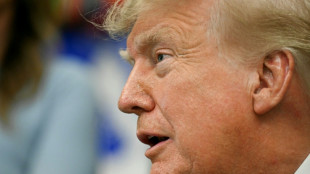
President Donald Trump, who campaigned on a promise to expel undocumented migrants, has accelerated deportations and cracked down on border crossings since returning to power this year.
Under a new memorandum of understanding, Palau will let up to 75 third-country nationals from the United States live and work on the sparsely populated archipelago, officials said Wednesday.
In return, the United States will grant $7.5 million to Palau for public service and infrastructure needs.
With some 20,000 people spread across hundreds of volcanic isles and coral atolls, Palau is by population one of the smallest countries in the world.
The migrants from the United States have not been charged with crimes and will help to fill needed jobs in Palau, both sides said.
"Palau would have to agree on a case-by-case basis as to individuals who will be arriving in Palau under the arrangement," the Pacific nation said in a statement.
The deal was announced following a call between Palau President Surangel Whipps and US Deputy Secretary of State Christopher Landau.
"Through this partnership, the United States and Palau are taking concrete steps to strengthen our security and protect our communities, while also fostering a safe, more secure, and more prosperous Indo-Pacific region," the US State Department said in a separate statement.
During the call with Whipps, Landau said the United States was committed to building a new hospital and improving Palau's capacity to respond to national disasters.
Washington will also provide additional funding of $6 million for reforms to prevent the collapse of Palau's civil service pension plan, while adding another $2 million for law enforcement initiatives.
The Palauan archipelago -- a string of limestone islands and coral atolls -- lies about 800 kilometres (500 miles) east of the Philippines.
Whipps has overseen the expansion of US military interests since winning power in 2020, including the construction of a long-range US radar outpost, a crucial early warning system as China ramps up military activity in the Taiwan Strait.
Palau gained independence in 1994 but allows the US military to use its territory under a longstanding "Compact of Free Association" agreement.
In return, the United States gives Palau hundreds of millions of dollars in budgetary support and assumes responsibility for its national defence.
K.Backman--StDgbl