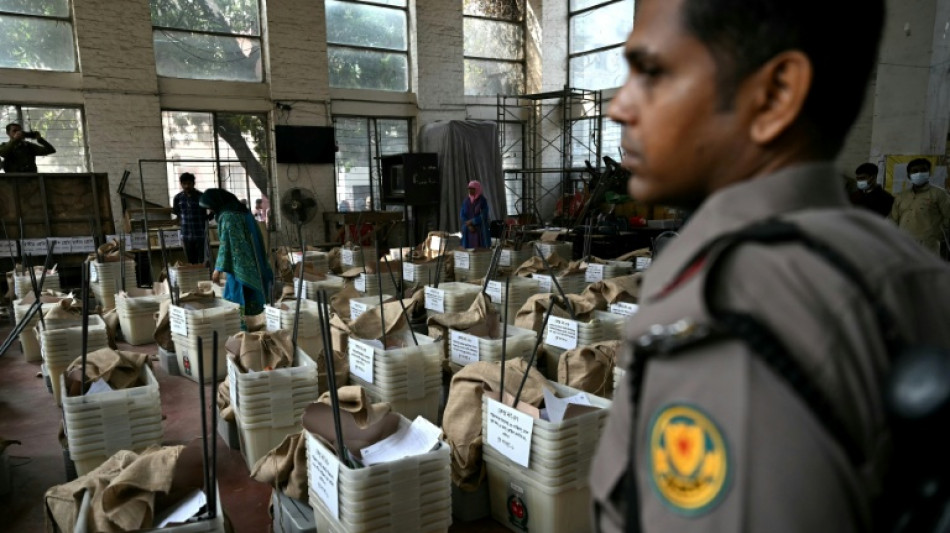
Bangladesh votes in landmark polls after deadly uprising / Photo: MOHD RASFAN - AFP



Bangladesh votes Thursday in its first election since a deadly 2024 uprising, as parties crushed under Sheikh Hasina's rule return to the fray with a powerful political heir facing an Islamist‑led coalition.
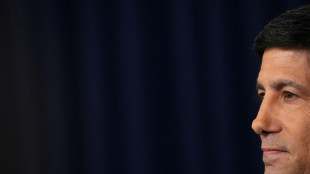
Leading prime ministerial hopeful Tarique Rahman, 60, is confident his Bangladesh Nationalist Party (BNP) can regain power -- but he faces a stiff challenge from the Muslim-majority country's largest Islamist party, Jamaat‑e‑Islami.
Jamaat chief Shafiqur Rahman, 67, has mounted a disciplined grassroots campaign, and, if victorious, the former political prisoner could lead the first Islamist‑led government in constitutionally secular Bangladesh.
Opinion polls vary widely, though most give the BNP the lead -- with some suggesting a knife‑edge race.
"The significance of this day is far-reaching," interim leader Muhammad Yunus, who will step down after the polls, said ahead of the vote in the country of 170 million people.
"It will determine the future direction of the country, the character of its democracy, its durability, and the fate of the next generation."
The 85‑year‑old Nobel Peace Prize winner has led the South Asian nation since Sheikh Hasina's 15‑year rule ended with her ouster in August 2024. His administration has barred her Awami League from contesting the polls.
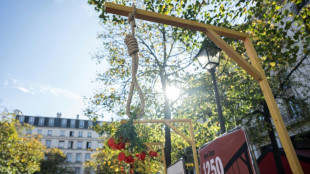
Hasina, 78, was sentenced to death in absentia for crimes against humanity for the bloody crackdown on protesters during her final months in power, and remains in hiding in neighbouring India.
- 'Crucial test'
Yunus has also championed a sweeping democratic reform charter to overhaul what he called a "completely broken" system of government and to prevent a return to one‑party rule.
On Thursday, the 127 million voters will also decide in a referendum whether to endorse proposals for prime‑ministerial term limits, a new upper house of parliament, stronger presidential powers and greater judicial independence.
Voters will elect 300 lawmakers directly, with a further 50 women chosen from party lists.
More than 300,000 security personnel have been deployed for the polls, which open at 7:30 am (0130 GMT), with counting by hand to begin after they close at 4:30 pm.
Results in past elections trickled in hours later -- though counting this time also includes referendum ballots.
"The crucial test for Bangladesh now will be to ensure the election is conducted fairly and impartially, and for all parties to then accept the result," said Thomas Kean, an analyst with the International Crisis Group.
"If that happens, it will be the strongest evidence yet that Bangladesh has indeed embarked on a period of democratic renewal."
- 'Just and inclusive '
The next government will inherit a battered economy in the world's second‑largest garment exporter, alongside delicate relations with neighbouring India.
The BNP's Rahman -- whose late parents both led the country -- told AFP that his first priority, if elected, would be restoring security and stability. But he warned the challenges ahead were immense.
"The economy has been destroyed," he said. "There are a huge number of unemployed. We need to create businesses for these young people to have jobs."
But his Islamist political rivals, who have campaigned on a platform of justice and ending corruption, sense their biggest opportunity in decades.
"We want to build a country of unity with everyone on board," Jamaat leader Rahman said in his closing campaign speech. "It will be a country where nobody gets the driving seat because of their family background."
Around 10 percent of Bangladesh's population are non-Muslim, most of them Hindu.
In his final address to the nation before voting, Yunus urged citizens to honour the "sacrifice" of the 2024 uprising and to put the "national interest above personal and party" agendas.
"Victory is part of democracy; defeat is also an inevitable part," he said. "Please dedicate yourselves to building a new, just, and inclusive Bangladesh."
K.Bergqvist--StDgbl