US sinks Iranian warship off Sri Lanka as war spreads / Photo: IBRAHIM AMRO - AFP



A US submarine torpedoed and sank an Iranian warship off the coast of Sri Lanka on Wednesday, the Pentagon said, as the war launched by the United States and Israel spread to another region.
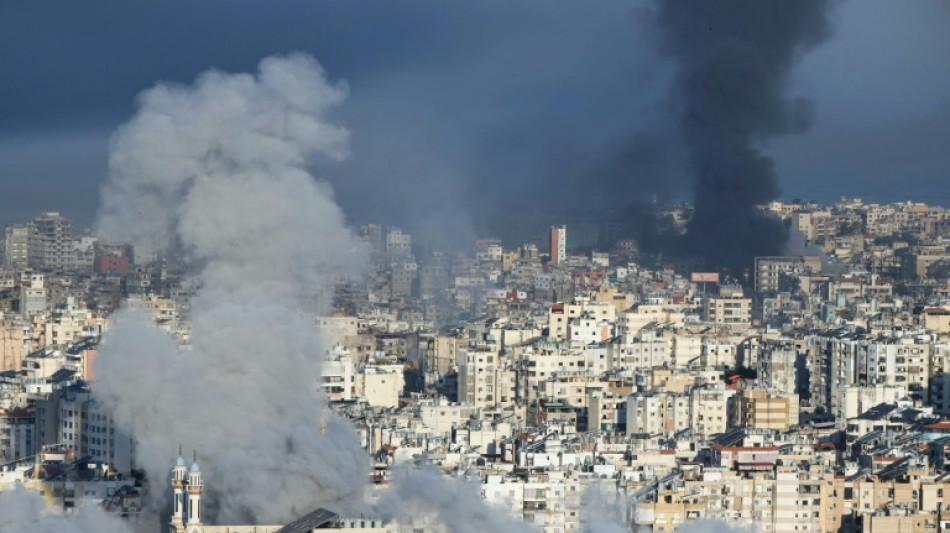
Chaos also spread within the Middle East with Iran striking ethnic fighters in Iraq, which plunged into a nationwide blackout as evening fell, and Israel issuing new evacuation orders as it pounded the Beirut area in response to Hezbollah.
Off Sri Lanka, an Iranian ship that had been on a friendly visit to India was suddenly sunk by a US submarine, the first such torpedoing since World War II.
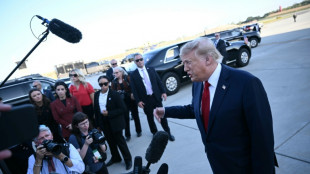
The IRIS Dena frigate "thought it was safe in international waters", US Defence Secretary Pete Hegseth told reporters.
Hegseth, who has previously boasted that the war would not be "politically correct", called the strike "quiet death" and said of the United States, "We are fighting to win."
The United States killed at least 87 people, Sri Lankan officials said, with 61 remaining missing. The island nation rescued 32 sailors, many of them wounded, Foreign Minister Vijitha Herath said.
The United States and Israel have struck Iran relentlessly since Saturday when an initial wave of attacks killed Ayatollah Ali Khamenei, the cleric-run nation's supreme leader since 1989.
The official IRNA news agency said that 1,045 military personnel and civilians have been killed, a toll that AFP could not independently verify.
Iran has responded by firing a barrage of missiles and drones across the region, and the Revolutionary Guards announced Wednesday that they had taken "complete control" of the Strait of Hormuz, the narrow chokepoint into the Gulf through which a quarter of the world's crude oil flows.
Oil tanker transits through the strait have plunged by 90 percent, energy market intelligence firm Kpler said, with some ships choosing to avoid the route.
Iranian strikes have caused fear and damage in Gulf cities such as Dubai and Riyadh, which have long taken pride in their safety from the tumult of the region.
- Missile over Turkey -
In another first, a missile launched from Iran was destroyed by NATO's air defence system while heading towards Turkey's airspace, drawing condemnation from Ankara and NATO.
A Turkish official later told AFP that Turkey was not the target of the missile, which "veered off course" and had been aimed at a British base in Cyprus.
Turkey, which has criticised the war, summoned the Iranian ambassador. Foreign Minister Hakan Fidan told his Iranian counterpart Abbas Araghchi in a phone call that "any steps that could lead to the spread of conflict should be avoided".
Iran also struck in northern Iraq's autonomous Kurdish area, killing a member from an exiled Iranian Kurdish group, a representative said, amid reports that the United States was looking to arm the guerrillas to infiltrate Iran.
"Separatist groups should not think that a breeze has blown and try to take action," said Ali Larijani, secretary of Iran's Supreme National Security Council.
"We will not tolerate them in any way."
Two pro-Iran fighters were killed in a separate strike on their base inside Iraq.
Iraq was later hit by a total electricity blackout. It was not clear if it was connected to the war, with the electricity ministry blaming a sudden drop in gas supplies to a key power plant.
- Warning on Lebanon -
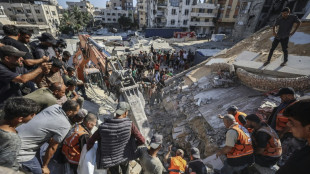
In Lebanon, which Hezbollah dragged into the war, strikes have so far killed 75 people and displaced more than 83,000 since the start of the new round of fighting, officials said Wednesday.
Israel told people living south of the Litani river -- an area of hundreds of square kilometres -- to leave, saying that the army was "compelled to take military action" against Hezbollah there.
French President Emmanuel Macron, in a telephone call with Israeli Prime Minister Benjamin Netanyahu, warned Israel against a ground offensive and to "preserve Lebanon's territorial integrity", the French leader wrote on X.
AFP video footage from Wednesday showed what appear to be two Israeli tanks amid residential buildings in Khiam, about six kilometres from the border.
Hezbollah said its fighters had engaged Israeli troops in "direct" clashes there, after having previously launched a swarm of drones at a naval base in Tel Aviv.
Israeli air strikes hit a hotel in Hazmieh -- the first reported attack on the predominantly Christian area in Beirut's suburbs, which is near the presidential palace and several foreign embassies.
Iran's military threatened to target Israeli embassies worldwide if Israel were to attack Tehran's mission in Lebanon.
- Gulf nations intercept missiles -
Saudi Arabia said it intercepted a series of cruise missiles as well as a drone targeting its huge Ras Tanura refinery. Drones a day before hit near the US consulate in Dubai, starting a fire, and a missile hit the US military base at Al-Udeid in Qatar.
The UAE and Qatar both said they had intercepted drone and missile salvos on Wednesday, with Abu Dhabi saying it had been targeted by three ballistic missiles and 129 drones, intercepting all but eight drones.
Kuwait has also been struck, with the health ministry announcing the death of an 11-year-old girl killed after she was hit by falling shrapnel.
Thirteen people, seven of them civilians, have been killed in countries around the Gulf since the war began.
The Pentagon has announced the deaths of six US service members since Saturday, four of them in Kuwait.
Qatar's premier Sheikh Mohammed bin Abdulrahman Al Thani accused Iran of dragging its Gulf neighbours into a "war that is not theirs" in a call with Iran's top diplomat.
The United States has encouraged all Americans to leave the region if they could find commercial flights, though air travel has been severely disrupted, while governments including Britain and France sent chartered flights to get their citizens out.
burs/sct/sst
W.Axelsson--StDgbl