EU and UK Seal Three Major Agreements on Food, Youth Mobility, and Carbon Markets
Ten years after the Brexit referendum, the European Union and the United Kingdom have moved to dismantle remaining trade and social barriers through three new agreements concluded in Brussels. The deals, set to take effect from 2028, aim to reduce food inspections, facilitate youth mobility, and link carbon trading schemes.
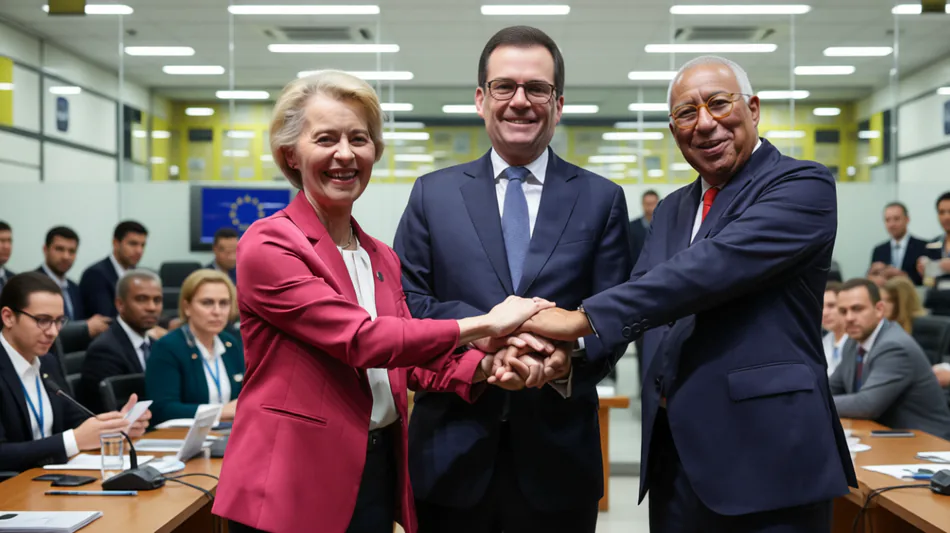
The European Union and the United Kingdom have initiated a significant thaw in post-Brexit relations, concluding three major agreements during a summit in Brussels. The deals, which address food safety standards, youth mobility, and environmental markets, are scheduled to enter into force starting in 2028, marking a tangible step toward reducing the barriers erected since the UK’s departure from the bloc.
The first agreement establishes a common sanitary and phytosanitary area, designed to eliminate the majority of certificates and physical checks currently imposed on trade between Great Britain and the EU. This simplification is conditional upon the UK adhering to the specific EU rules outlined in the accord. A primary objective is to facilitate the movement of goods between Great Britain and Northern Ireland while allowing British products that are currently banned or subject to strict controls—such as fresh sausages, certain shellfish, and seed potatoes—to re-enter the European market. This framework is due to come into effect on March 1, 2028.
The second agreement creates a mobility program for young people aged 18 to 31. Under this scheme, 100,000 EU nationals and an equivalent number of British citizens will be permitted to work, study, travel, volunteer, or serve as au pairs in the other territory for periods of up to three years. The first movements under this program are expected to begin by January 2030 at the latest. Additionally, the UK is set to rejoin the Erasmus+ student exchange program from 2027.
While the mobility agreement represents a significant social bridge, it leaves unresolved the issue of university tuition fees. Both sides have been granted a six-month window to negotiate the applicable fees for European students studying in the UK and British students attending institutions in the EU. This delay highlights the complexity of aligning educational policies across the new relationship.
The third agreement focuses on environmental policy, linking the European Union Emissions Trading System with the UK’s equivalent scheme from 2028. Under this arrangement, carbon quotas may be recognized by both jurisdictions. Consequently, goods covered by these mechanisms should be exempt from the carbon border adjustments currently applied at the edges of the EU and the UK, pending the completion of necessary legal procedures.
Beyond these three core texts, the summit produced broader frameworks for cooperation in defense, migration, and digital affairs. A framework agreement will enable the UK to participate in European civilian crisis management missions. London and Brussels have also expressed a desire to deepen collaboration on defense capabilities, military mobility, cyber-attack prevention, hybrid threats, and the protection of critical infrastructure.
On migration, a structured dialogue will be established to strengthen efforts against people smuggling and unauthorized crossings of the English Channel, while facilitating information exchange between authorities. Police cooperation is also set to increase, particularly regarding vehicle data, criminal records, biometrics, and electronic evidence.
In the digital sector, the two sides launched a partnership focusing on artificial intelligence, quantum technology, secure infrastructure, and digital identities. A parallel dialogue on economic security will prioritize steel, electric vehicles, emerging technologies, and supply chains.
Negotiations regarding the UK’s participation in the European electricity market remain ongoing, with completion expected in 2027. Additionally, both parties aim to accelerate the mutual recognition of architects’ qualifications. While the summit marks a clear departure from the isolationism that characterized much of the post-Brexit era, the practical impact of these outcomes remains dependent on the implementation of legal texts and timetables spanning several years.
P.Hedlund--StDgbl