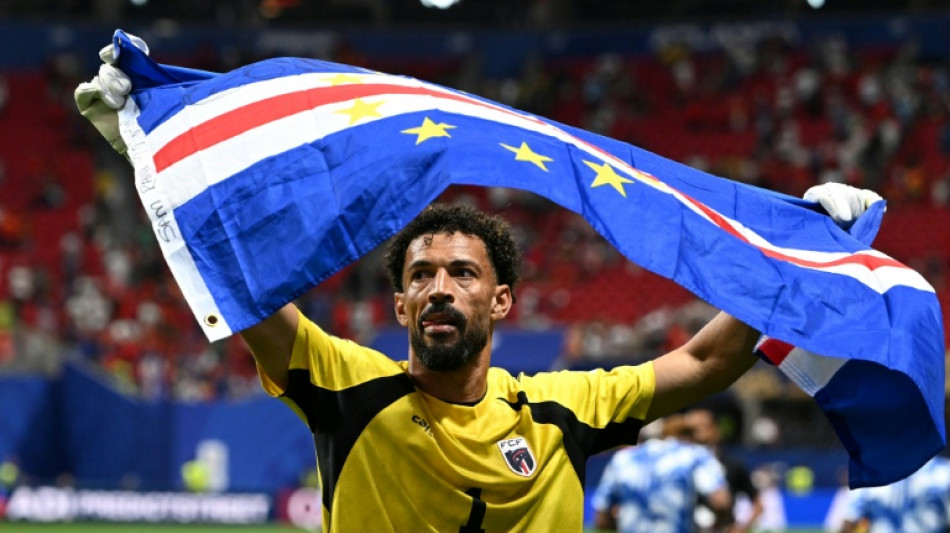
Africa the winner of expanded World Cup amid mixed fortunes for minnows / Photo: ROBERTO SCHMIDT - AFP

Cape Verde have captured the imagination and secured a World Cup showdown with Lionel Messi's Argentina, but they are just part of a success story for African football as the group stages come to a close.
A record 10 African nations qualified for the expanded 48-team tournament and only Tunisia are headed home before the last 32.
Spain, England, Portugal and Brazil are among the pre-competition favourites that have failed to beat African opposition, with Morocco confidently talking up their chances of becoming the first world champion from the continent.
"That shows the quality of African football," said Algerian star Riyad Mahrez.
"When you see nine out of 10 teams going through for the next round in the biggest tournament, that shows a lot."
Cape Verde's fairytale has been manna from heaven for FIFA as they defend their decision to increase the tournament by 16 teams - a move critics say is designed to rake in record revenues for football's governing body.
The smallest nation ever to reach the knockout stages of the World Cup, the archipelago of just over 500,000 people, resisted the might of Spain to secure a draw on their tournament debut.
Forty-year-old goalkeeper Vozinha instantly became an internet sensation for his man-of-the-match display against the European champions and now boasts 17 million Instagram followers as a result.
Further draws against two-time winners Uruguay and 2034 hosts Saudi Arabia saw them eliminated at Cape Verde’s expense.
- 'A matter of time' -
Africa's allocation of qualifiers was doubled from the last World Cup and other than a troubled Tunisia, who conceded 12 goals in three defeats, they have more than merited more representation on the global stage.
"I have been working on the African continent for 15 years now. I see federations becoming better organised, coaches improving and players getting better - Africa keeps progressing," said DR Congo coach Sebastien Desabre.
"For me that won't stop because there is still room for growth. I think and hope that an African team will win the World Cup this year or in the coming years. To me, it is just a matter of time."
Morocco, the first African semi-finalists four years ago, have proved an inspiration for others on the continent.
The Atlas Lions dominated Brazil for long spells of their opening 1-1 draw and are in confident mood despite a tough last 32 showdown against the Netherlands.
"We need to believe in this objective, this target (to win the World Cup)," said Morocco coach Mohamed Ouahbi.
"Morocco have entered a whole new dimension. The players, the fans believe in their team and our opponents respect our team."
The tiny Carribean island of Curacao also had their moment of World Cup glory in securing a 0-0 draw with Ecuador.
However, Curacao bowed out alongside Haiti and Panama, who both failed to register a point, as all three qualifiers from a weakened CONCACAF qualifying pool without co-hosts USA, Mexico and Canada ended winless.
In contrast to Africa's surge, Asian sides have failed to justify a similar increase to nine teams.
Only Japan and Australia have progressed from the Asian Football Confederation region.
Jordan and Uzbekistan ended their World Cup debuts without a point, while Iraq shipped 12 goals after being handed a nightmare draw up against France, Senegal and Norway.
A goal-laden group stages has been blessed by prolific performances from some of the game's biggest names such as Lionel Messi, Kylian Mbappe, Vinicius Junior and Erling Haaland.
But amid suggestions the World Cup could eventually grow to 64 teams, there has also been plenty of evidence that expansion has diluted the depth of quality on show.
There have been eight victories by a four-goal margin in the group stages, just one less than in the entirety of the past three World Cups combined.
D.Fransson--StDgbl