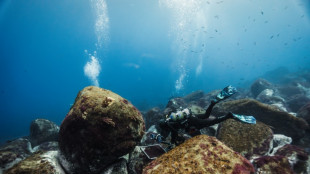
South Korea launches new bid to guide crowd-pulling shark to sea / Photo: Jung Yeon-je - AFP/File



South Korean authorities began a new attempt Wednesday to coax a shark-turned-viral sensation back to sea, with falling temperatures in the Busan canal where it is stranded raising concerns for its survival.
The dusky shark -- affectionately nicknamed "Bukhangi" by fans -- was spotted last month in an artificial waterway in the southeastern port city, with climate activists linking its appearance to climate change.
The three-metre shark, a species typically found in tropical climates, has since amassed a huge following, drawing more than 1.6 million peopleto the Busan canal for a glimpse in person -- bringing an unexpected boon to the local economy.
South Korean authorities twice tried unsuccessfully to steer Bukhangi back to sea -- using water jets and then nets -- before launching a third attempt Wednesday as the water grows colder.
"The operation began at 10 am this morning, and we are not entirely sure when it's going to end -- given our previous attempts were not successful," an oceans ministry official told AFP.
Officials initially opted to wait for the shark to leave on its own, but growing overall concerns for its well-being prompted a third attempt, she added.
In a separate statement, the ministry said the limited water depth in the artificial waterway also prompted authorities to decide to launch their third attempt.
Busan authorities livestreamed the operation as curious onlookers gathered along the canal for another glimpse of the shark.
For Wednesday's operation, authorities fixed nets to floating pontoons, to be moved gradually as the shark heads towards the open sea.
Once it passes, the nets will block its return to the waterway, they said.
The shark has also been celebrated for its unexpected boost to the local economy, with Busan Mayor Chun Jae-soo thanking it for generating publicity he said would otherwise have cost "trillions".
But environmental groups say the shark's appearance should be seen as a warning of the climate crisis, rather than a spectacle or economic boost.
They link its arrival to warming seas, saying rising temperatures are pushing warm-water fish northward -- and subtropical sharks in pursuit.
D.Sandstrom--StDgbl