Snap Specs Review: Big, Bold AR Glasses That Don’t Quite Reach Tony Stark Status



Snap has launched its sixth-generation Specs augmented reality glasses, featuring a partnership with Robert Downey Jr. to boost their profile. Despite the high-profile endorsement and advanced technology packed into the frames, early testing reveals significant limitations in field of view, processing speed, and daily usability that may hinder widespread adoption.
Snap Inc. has released the sixth generation of its Specs augmented reality glasses, a device that attempts to bridge the gap between futuristic technology and wearable fashion. The company’s marketing strategy prominently features Robert Downey Jr., who serves as the honorary Chief Customer Experience Officer. This high-profile partnership aims to transform public perception of the hardware, which has historically been viewed with skepticism due to its unconventional aesthetic.
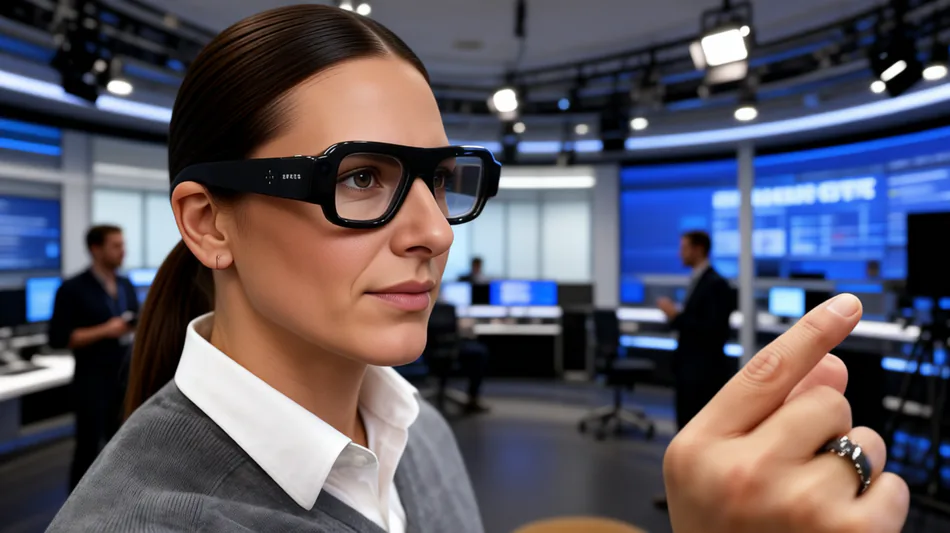
The device is characterized by its substantial physical presence. The all-black frames are notably thick and bulky, a design choice necessitated by the need to house internal components including Qualcomm Snapdragon CPUs, storage, and battery power within the temples. Unlike tethered systems that rely on external pucks for processing, Snap has integrated this technology directly into the glasses. However, the resulting form factor is aggressive; the profile is extreme, and the device is designed to make a distinct fashion statement rather than blend in as standard eyewear.
Despite the bulk, Snap claims the glasses weigh 132 grams, a weight that reviewers have described as surprisingly comfortable on the face compared to their visual appearance. The frames accept snap-in prescription lenses from partners such as Lensly for $100. The lenses are electrochromic, meaning they can auto-dim when worn outdoors to manage brightness, allowing the device to function in various lighting conditions.
The augmented reality experience is delivered through Liquid Crystal on Silicon (LCoS) waveguide lenses. These lenses provide a field of view of 51 degrees, an improvement over previous generations but still narrow compared to immersive virtual reality headsets. The floating digital window can remain fixed in the user’s vision or track head movements. However, the limited field of view means that visual content can easily slip out of sight if the user’s gaze shifts too far from the center.
Interaction with the device relies on a gesture-based interface rather than gaze tracking or voice commands alone. Users control the system through point, press, pinch, and drag motions. During initial setup, users interact with floating virtual objects, such as jewels or jellyfish, to calibrate the system. The primary controls are accessed via hand gestures; for instance, turning over one’s palm reveals a virtual home button. Snap has spent years refining this interface, which allows users to activate features by pinching and holding, or to drag items by grabbing them virtually.
The hardware includes two black-and-white cameras positioned outside each lens for world reading and hand tracking, along with a central color camera for capturing photos and videos. Specific resolution details for these captures have not been fully disclosed. Users can take photos by long-pressing a button on the top left edge of the frame or record 30-second videos with a quick press.
In testing, the device supported several custom applications. One demonstration involved a Harry Potter-themed experience where users could place virtual objects onto real-world surfaces. The system required users to find a flat surface and stare at it to map its geometry before placing augmented reality elements, such as letters flying from a mailbox or a desk with a wand. Another test involved navigating to YouTube to watch video content, with audio transmitted through the temple stems. The audio was described as loud and rich.
Productivity features are limited. While users can connect a physical Bluetooth keyboard, typing on the small virtual screen is difficult. The lack of a physical reference point makes touch-typing unnerving, as users must look up to see the display rather than glancing at a fixed screen. Consequently, the device is not positioned as a primary tool for heavy productivity tasks.
Performance issues were noted during testing. Despite having two AR chips, some operations felt slow. Applications occasionally took longer to load than expected, and the system sometimes failed to keep up with rapid hand motions. Additionally, the augmented reality anchoring technology showed limitations; in one drawing application, projected guidelines did not remain perfectly stationary on the physical paper, making precise alignment difficult.
Image quality is described as sharp and color-rich, supporting 16 million colors. However, some users may notice faint rainbowing effects, a common artifact of waveguide technology. For scenarios requiring higher contrast or reduced visibility of the real world, such as watching movies, users can activate the electrochromic lenses to make them semi-opaque.
Battery life is rated at approximately four hours on a single charge. In practical use, battery drain can be rapid; one test showed the lens battery dropping from 50% to 13% in just 45 minutes. Snap includes a charging case that provides four additional charges. Oddly, the LTE connectivity module is housed within this case rather than the glasses themselves. This means users requiring on-the-go cellular connectivity must carry the case, which may necessitate a bag or backpack.
The Snap Specs are priced at $2,195 for the base model. An LTE-enabled charging case adds an additional $300 to the cost. Preorders are currently open with a $200 down payment, and shipments are expected before the end of 2026. In the UK, the glasses will cost £1,995, and in France, €2,295.
The high price point places the Specs in direct competition with other smart glasses, such as Meta’s Ray-Ban Display models or the more immersive Meta VR Glasses, which start at $1,299. However, the Meta VR Glasses rely on a tethered puck for power and compute, whereas Snap has integrated these functions into the frames. This integration allows for greater mobility but contributes to the device’s bulk and cost.
While the partnership with Robert Downey Jr. successfully generates attention and frames the device as a desirable object of envy, the practical reality of wearing them remains complex. Users must decide whether the convenience of on-face computing justifies the $2,195 price tag and the social implications of wearing large, camera-equipped glasses in public. The device represents a significant engineering effort to miniaturize technology, but it has not yet reached the seamless utility associated with its fictional inspiration.
T.Sjoberg--StDgbl